Portal | Wildflowers Home Page | Plant Books | 500+ Flower Photos | Edibles | Weed Ecology | Mushrooms | Links

Lily Family
Key Words: Flowers with parts in threes. Sepals and petals usually identical.
If you find a plant with parallel veins in the leaves and regular flowers with parts in multiples of three, chances are you have a member of the Lily family. The flowers have 3 sepals and 3 petals, usually identical in size and color. Any normal person would just say there are 6 petals, but botanists distinguish a difference. Starting from the outside of the flower you count towards the inside: sepals, petals, stamens and pistil. In Lilies, the first layer consists of 3 colored sepals, while the second layer consists of 3 colored petals. Such botanizing may seem overly academic, but it becomes important as you learn more complex family patterns.
Members of the Lily family have 6 stamens, although some may be lacking anthers. The tip of the pistil, called the "stigma" is also noticeably 3-parted. You are most likely to confuse the Lily family with the Iris family, except that the Irises have only 3 stamens, and Iris leaves grow from the base in a flat plane, as if the plants have been squashed in a book. Worldwide there are about 250 genera and 3,700 species in the Lily family including 75 genera in North America.
As you study plants and their relationships you will realize more and more that evolution isn't just an abstraction that happened in the past, but an active process that you can reach out and touch. For example, if one population of day lilies is similar but different from another population, then we have to decide if the differences constitute mere variations within a species, or a whole new species. This is kind of like trying to find the line between two neighboring cities. There might be a lot of difference downtown, but you could drive through the suburbs from one to the other without seeing the boundary. How do you know when you have crossed the line from one species into a new one?
The same is true at the family level. Among the Lilies there is enough variation to justify breaking the family apart into smaller families of more closely related plants. For instance, daffodils are so different from the more typical lilies described here that they really deserve a family of their own. The trouble is that daffodils are closely related to plants that are closely related to other plants that are closely related to more typical Lilies. So where do you draw the line between one family and the other? In the effort to clearly distinguish these groups, botanists have proposed to break the Lily family up into as many as 70 distinct families, but to no avail. Recent genetic studies are helping to clear up the confusion, and will eventually require a complete rewrite of the family. In the interim, I rely on the historical subfamilies that work adequately to group the Lilies into their approximate relationships.
Virtually everything in the Lily subfamily is edible, such as onions and blue camas, however, there are a few deadly plants in the Bunchflower subfamily (with bunches of little white or greenish flowers), like the death camas which could easily be mistaken for edible Lilies. For this reason, it is important to harvest lilies for food only when you can positively identify them, usually when in bloom.
The Asparagus subfamily includes lilies that produce berries instead of dry seed capsules. Some of the berries are barely edible, while others are not. The Agave subfamily includes those spiny plants of the desert southwest, the agave, sotol and yucca, any of which can be used as a source of fiber for making cordage or rope. The Aloe subfamily includes the mucilaginous Aloe vera so favored for treating sunburns. The daffodil belongs to the Amaryllis subfamily.
Bunchflower Subfamily
These members of the Lily Family have little bunches of white flowers and some are deadly poisonous.
![]() Zigadenus venenosus. Death camas. Pony, Montana. | ![]() Zigadenus spp. Death Camas. Coleville, Washington. |
![]() Zigadenus elegans. Mountain Death camas. Bridger Mountains. Near Bozeman, Montana. | ![]() Zigadenus elegans. Mountain Death Camas. Bridger Mountains. Near Bozeman, Montana. |
![]() Xerophyllum tenax. Beargrass. Yellowstone National Park. | ![]() Xerophyllum tenax. Beargrass. Yellowstone National Park. |
Lily Subfamily
These members of the Lily Family usually have larger, more showy flowers. The roots produce bulbs like the tulip.
![]() Camassia quamash. Blue camas. Montana. | ![]() Camassia quamash. Blue Camas. (Planted in our yard.) Pony, Montana. |
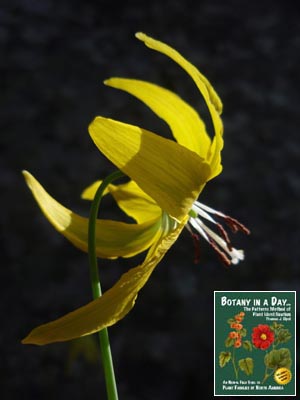
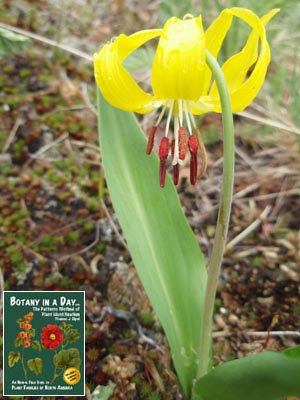
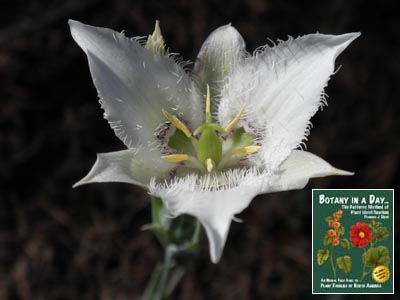
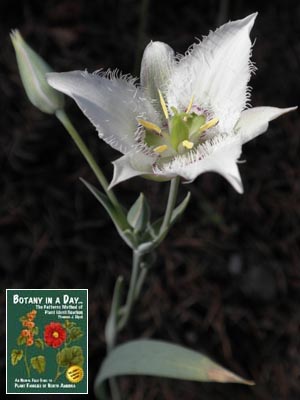
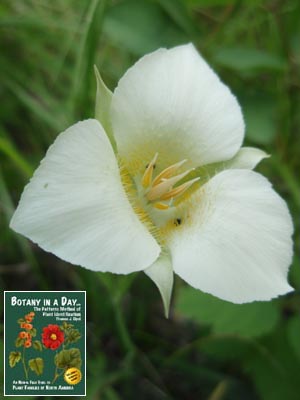
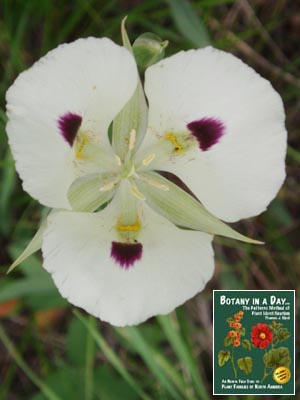
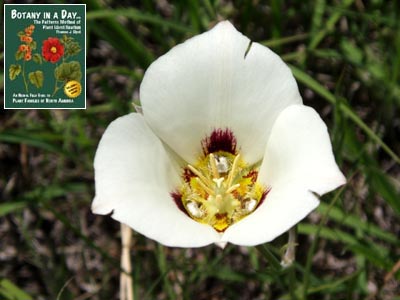
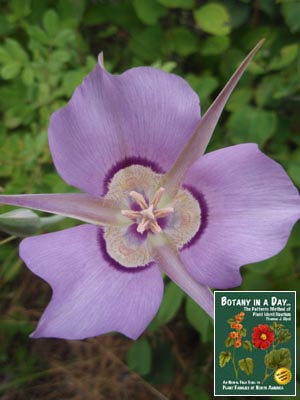
![]() Calochortus spp. Sego Lily. Near Glacier National Park. Montana. | ![]() Erythronium grandiflorum. Glacier Lily. Used with permission of Mountain Escapes Photography. |
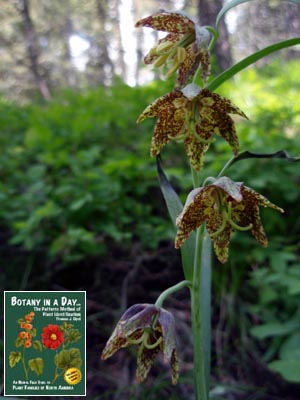
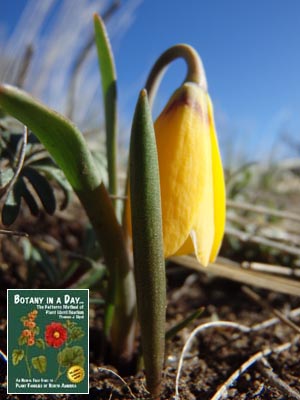
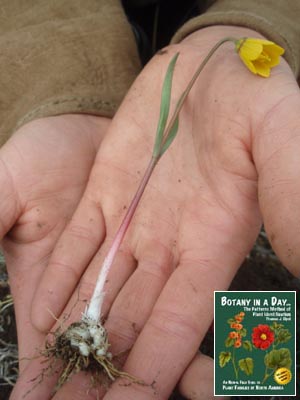
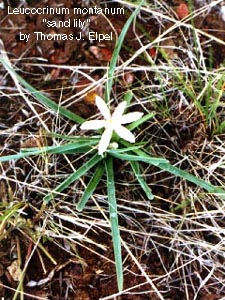
![]() Fritillaria pudica. Yellowbell. Tobacco Root Mountains. Pony, Montana. | ![]() Leucocrinum montanum. Sand Lily. Tongue Reservoir. Eastern Montana. |
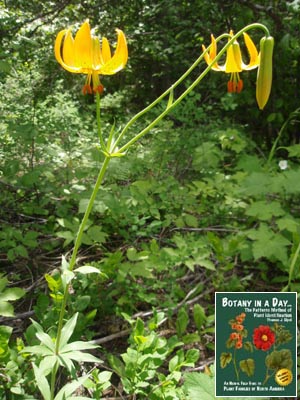
![]() Lilium columbianum. Columbia Tiger Lily. This one was photographed along the northern California coast, but the same species also grows in parts of northwest Montana and throughout the Columbia River watershed. | ![]() Botany in a Day |
Asparagus Subfamily
These members of the Lily Family produce their seeds in berries instead of capsules.
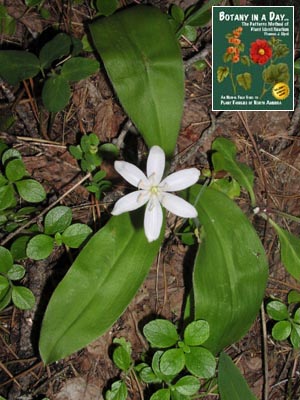
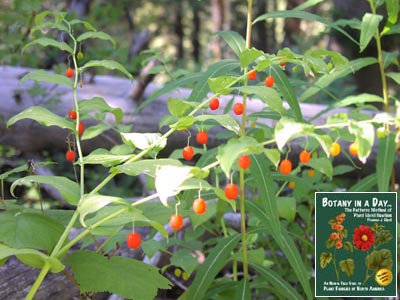
![]() Clintonia uniflora. Queen's Cup. Glacier National Park. Montana. | ![]() Smilacina stellata. Star Solomon's Seal. Pony, Montana. |
![]() Smilacina racemosa. Solomon's Plume. Tobacco Root Mountains. Pony, Montana. | ![]() Smilacina racemosa. Solomon's Plume. Tobacco Root Mountains. Pony, Montana. |
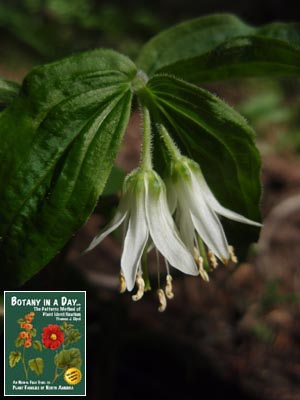
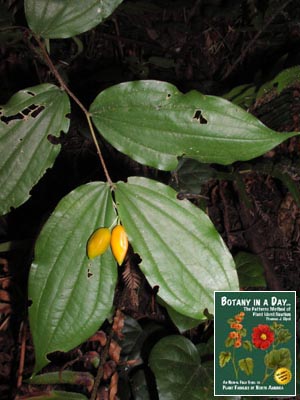
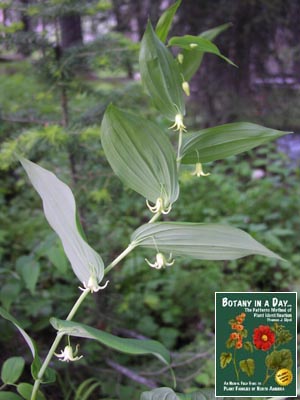
![]() Streptopus amplexifolius. Twisted Stalk. Tobacco Root Mountains. Pony, Montana. | ![]() Streptopus amplexifolius. Twisted Stalk. Tobacco Root Mountains. Pony, Montana. |
-Also see these West Coast members of the Lily Family/Asparagus Subfamily-
|
Onion Subfamily
These members of the Lily Family have their petals and sepals at least partially fused together and they have bulbed roots.
![]() Allium spp. Wild Onions. Tobacco Root Mountains. Pony, Montana. | ![]() Allium spp. Wild Onions. Tobacco Root Mountains. Pony, Montana. |
![]() Allium schoenoprasum. Wild Onions or Wild Chives. Tobacco Root Mountains. Pony, Montana. | ![]() Allium schoenoprasum. Wild Onions or Wild Chives. Tobacco Root Mountains. Pony, Montana. |
![]() Triteleia grandiflora. Brodiaea Lily. Tobacco Root Mountains. Pony, Montana. | ![]() Allium spp. Wild Onion. Photographed along the Madison River in southwestern Montana. |
![]() Agave palmerii. Palmer's Agave. Near Portal, Arizona. |
![]() Dasylirion wheeleri. Sotol. Near Portal, Arizona. |
![]() Yucca glauca. Yucca. Red Rocks Park. Denver, Colorado. This is a hardy species of yucca that grows wild as far north as Montana. |
![]() Yucca elata. Soap Tree Yucca. Near Portal, Arizona. |
![]() Yucca baccata. Banana Yucca. Fort Bowie National Historic Monument. Arizona. |
![]() Nolina spp. Nolina. Near Portal, Arizona. | ![]() Botany in a Day |
-Also see these West Coast members of the Lily Family-
|
There are more
Lily Family pictures
at the Texas A&M Biometrics Experimental Database.
-Learning Plants by Families Article-
Go to Page 6: The Mallow Family
Return to Introduction

Check out Botany in a Day
Return to the Plant Families Index
Return to the Wildflowers & Weeds Home Page
| ![]() |
How to Place Retail Orders
Order On-Line: Order on-line with your Visa, Mastercard, Discover or American Express. Simply click on the links to learn more about each product and enter the quantity you want in the little white boxes, then click the "Add to Order" button. You will be transferred to our secure payment service for the final check-out.
Order by mail or telephone: We accept checks and money orders payable in US dollars. Please use the on-line shopping basket to tally your order. Click the "Pay for Order On-line" button to calculate the postage, then print or copy the information and call or send it to us at the address above.
Shipping Options
![]() | ![]() |
| USA Customers We ship all USA orders via USPS Priority Mail, except as otherwise noted on the website. Express Mail shipping is available by special request. | International |
Granny's Country Store Departments
Tom's Books & Videos
Wilderness Survival | Nature, Wildlife, Tracking
Wildflowers and Edibles | Resources for Educators
Home-Building Resources | Goods for Green Living
Books & Gifts for Kids
Thomas J. Elpel's Web World Pages
Green University | Granny's Country Store | HOPS Press, LLC
Sustainable Living Skills | Primitive Living Skills
Wildflowers & Weeds | Society of Primitive Technology
Jefferson River Canoe Trail | What's New? | Search This Site!
Return to Thomas J. Elpel's
Web World Portal | Web World Tunnel
© 1997 - 2008 Thomas J. Elpel